

WTV is a short form used in everyday texting and online chats. It stands for “whatever” and people use it to keep their messages quick and casual. You will mostly see it in informal conversations between friends.
This slang term is popular on platforms like Snapchat, Instagram, and WhatsApp. It can express a relaxed attitude, mild annoyance, or simply show that someone is okay with any option. It is a simple word that carries a lot of meaning depending on how it is used.
What Does WTV Mean?
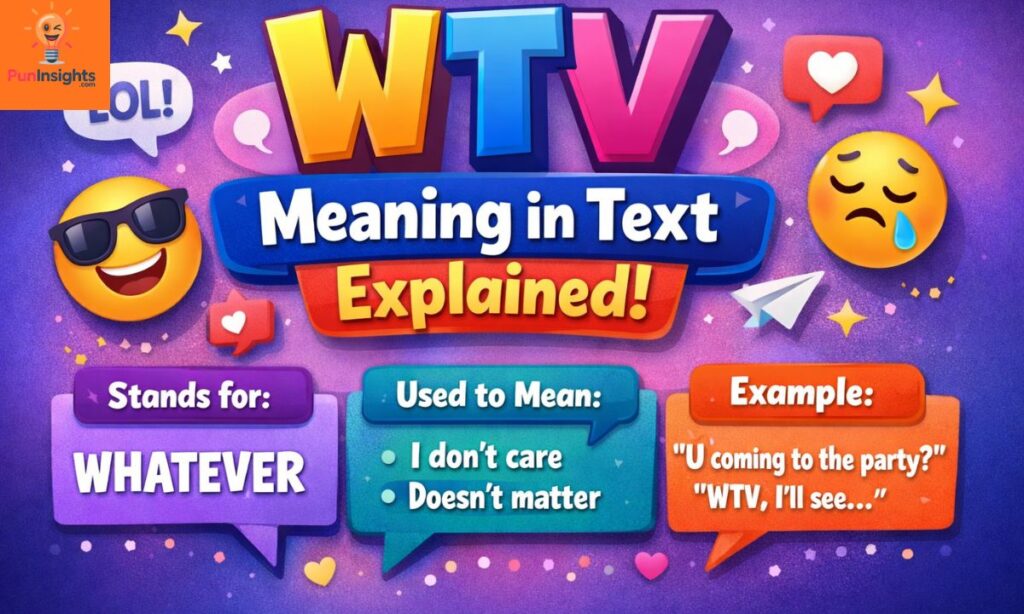
WTV stands for “whatever.” It is a common internet slang term used in texting and online messaging to express indifference, casual agreement, or sometimes mild frustration. The meaning shifts based on tone and context. In a friendly chat, WTV means “I am fine with anything.” In a tense conversation, it can signal dismissal or annoyance.
It can be written as WTV, Wtv, or wtv. All three versions carry the same meaning. There is no formal or correct capitalization rule for it.
Origin of WTV
The word “whatever” has been a casual expression in English for decades. The abbreviation WTV grew naturally from the rise of SMS texting in the early 2000s. Back then, character limits on text messages pushed people to shorten words. Platforms like MSN Messenger and AIM helped normalize abbreviated language.
As smartphones and apps like WhatsApp and Snapchat became mainstream, WTV spread widely among teens and young adults. Today it is a staple of digital communication slang.
How to Use WTV in Text Messages
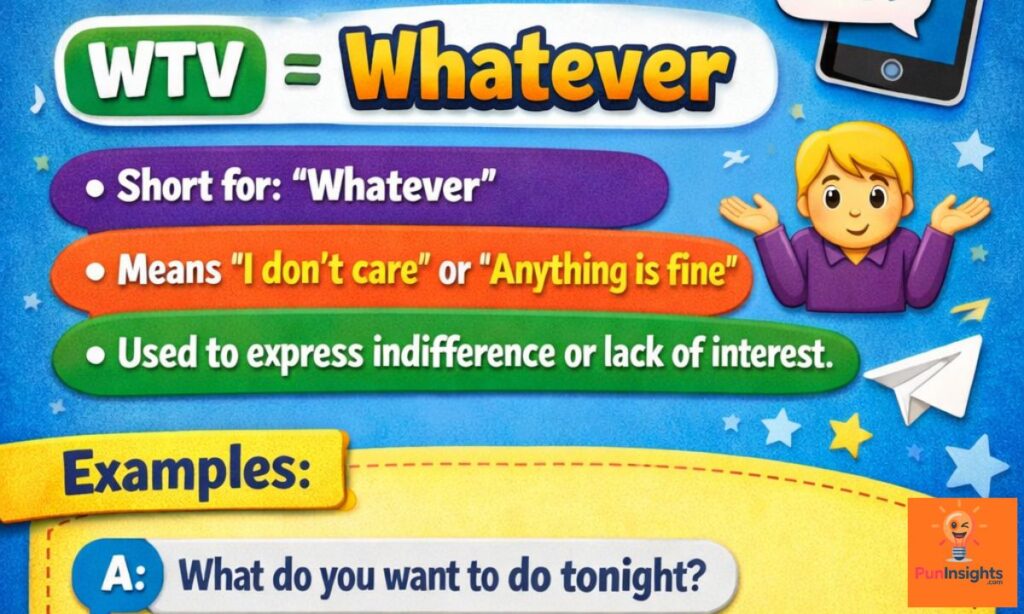
Using WTV is straightforward. You drop it into a conversation when you want to express that you have no strong preference or that you are done pushing back on something. Here are three common ways people use it:
To show flexibility: “WTV works for me, just let me know.” To express indifference: “I don’t really care, WTV.” To end a debate: “WTV, do what you want.”
Always consider the tone before sending WTV on its own. Adding an emoji like 😊 softens it. Sending it alone, especially with a period, can come across as cold or passive-aggressive.
WTV Meaning in Text from a Boy
When a boy sends WTV in a text, it usually means one of two things. Either he genuinely has no preference and is being easygoing, or he is feeling frustrated and shutting down the conversation. Context is key here. If the conversation is light and friendly, WTV is likely just his way of saying “I am cool with whatever you decide.” If there was an argument or disagreement before he sent it, it probably signals that he is done talking about it. Pay attention to what came before that single WTV reply.
WTV Meaning Instagram
On Instagram, WTV shows up in comments, captions, and DMs. People use it to project a laid-back, unbothered energy. A caption like “posting this WTV 😎” suggests confidence and a carefree attitude. In comment sections, it usually means the person is not invested in the topic being discussed. It fits right into the casual, fast-paced culture of Instagram where short reactions are the norm.
What Does WTV Mean on Snapchat?
Snapchat is built around quick, fleeting messages, so short slang like WTV fits perfectly. On Snapchat, WTV is most often used to express a relaxed or nonchalant mood. A snap reply of “WTV, just chilling” tells you the person has nothing going on and is not bothered by much. It can also appear in group chats where someone wants to go with the flow without expressing a strong opinion.
WTV Examples Table
| Situation | Message Sent | What WTV Means Here |
| Choosing a restaurant | “Pizza or tacos?” / “WTV, both are fine” | No preference, easygoing |
| After a disagreement | “Can we talk?” / “WTV” | Dismissal, done with the topic |
| Planning a hangout | “What time works?” / “WTV works for you” | Flexible and open |
| Instagram caption | “Posting this WTV 😂” | Carefree, unbothered attitude |
| Snapchat reply | “WTV, just chilling at home” | Relaxed mood, nothing specific going on |
WTV vs Other Casual Text Abbreviations
| Abbreviation | Stands For | Tone |
| WTV | Whatever | Indifferent, flexible, or dismissive |
| IDC | I Don’t Care | More direct and blunt |
| NVM | Never Mind | Dropping a topic casually |
| IKR | I Know Right | Agreement and shared feeling |
| SMH | Shaking My Head | Mild disappointment or disbelief |
WTV is softer than IDC and more passive than NVM. It fits best when you want to seem relaxed rather than blunt.
Why People Use WTV in Text
People use WTV for a few clear reasons. First, it saves time. Typing three letters is faster than spelling out “whatever.” Second, it fits the tone of casual digital conversation. Nobody wants to write a paragraph when a quick WTV will do. Third, it communicates a vibe. Using WTV signals that you are relaxed, not overthinking things, and easy to be around. Teens and Gen Z use it especially often on Snapchat and TikTok to stay in line with the casual, low-effort communication style that dominates those platforms.
Common Responses to WTV
When someone sends you WTV, you have a few options depending on the context:
If it was friendly: Just move forward with the plan. They are genuinely okay with anything. If it seemed annoyed: Give them space or ask if everything is alright. If you are unsure: Follow up with something light like “Okay cool, I’ll decide then!”
You do not always have to respond to WTV. Sometimes silence is the right answer, especially if it ended a heated exchange.
WTV in Different Platforms
WTV shows up across nearly every digital platform used today. Here is a quick breakdown of how it behaves on each:
WhatsApp: Used in group chats and one-on-one messages to show flexibility or shut down a debate. Snapchat: Common in quick snap replies and streaks to express a chilled-out mood. Instagram: Appears in captions and comments to project a cool, unbothered image. TikTok: Used in video comments to respond to debates or show indifference to opinions. Twitter/X: Drops into replies and threads when someone wants to opt out of an ongoing argument. Gaming chats: Used to show agreement or cooperation without typing much.
Fun Facts About WTV
WTV can also, in rare contexts, stand for “Web Television,” referring to streaming content online, though this use is uncommon in casual texting.
WTVTF is an intensified version of WTV that adds “the f***” for extra emphasis.
WTV has been in digital use since at least the mid-2000s, making it one of the older surviving text abbreviations still in active use.
Millennials tend to spell out “whatever” while Gen Z prefers WTV, showing how texting habits differ between generations.
Do’s and Don’ts of Using WTV
Do’s: Use WTV with close friends in casual conversations. Add an emoji to soften the tone if needed. Use it when you genuinely have no preference. Keep it to informal platforms like Snapchat, Instagram, and WhatsApp.
Don’ts: Do not use WTV in professional emails or workplace messages. Do not send WTV alone in a serious or emotional conversation. Do not overuse it as it can make you seem consistently uninterested. Do not use it with someone who might not understand text slang.
WTV vs IDC: Subtle Differences
WTV and IDC both express not caring, but there is a small but important difference in how they feel. WTV is more passive and open-ended. It suggests “I am flexible” or “go ahead, I am not bothered.” IDC, which stands for “I Don’t Care,” is more direct and can sound harsher. If a friend asks where you want to eat and you say WTV, that feels relaxed. If you say IDC, it can feel sharper, almost like you are brushing off the question. Both are casual, but WTV lands softer in most situations.
Tips to Use WTV Effectively
Use WTV only in casual settings with people you are comfortable with. If the conversation has any emotional weight, avoid WTV as a response. Pair it with context: “WTV, I’m down for pizza too” is clearer than just “WTV.” Read the room. If the other person is emotionally invested, WTV can feel dismissive. When in doubt, just type “whatever” to be safe and clear.
Pop Culture References of WTV
The word “whatever” has a long history in pop culture, from Cher’s famous “As if!” era in the 1995 film Clueless to Gen Z’s online habits. While WTV itself has not landed a major movie role, it represents the same dismissive energy that has been part of youth culture for decades. On TikTok, sounds and trends built around unbothered, nonchalant attitudes often feature WTV in captions and comments, cementing its place in the current generation’s digital language.
Why WTV Matters in Modern Texting
Text slang like WTV is not just laziness. It is a reflection of how communication has evolved. People today need to respond faster, express nuance in fewer words, and match the tone of their platform. WTV does all three. It carries emotional weight, signals social cues, and keeps conversations moving. Understanding slang like WTV helps you read conversations more accurately and communicate without sounding out of touch. Whether you use it or just need to decode it when someone sends it your way, knowing WTV is part of staying fluent in modern digital communication.
Conclusion
WTV is a simple, three-letter abbreviation that carries a lot of conversational power. It stands for “whatever” and can mean anything from “I am easygoing” to “I am done with this conversation,” depending on the context. It works across Snapchat, Instagram, WhatsApp, and beyond.
Use it wisely in casual chats, avoid it in serious or professional settings, and always pay attention to the tone around it. Now that you understand WTV fully, you are ready for any text that comes your way.
Frequently Asked Questions
What does WTV mean in text?
WTV stands for “whatever.” It is used in casual texting to show indifference, flexibility, or a relaxed attitude toward something.
Is WTV rude to use?
It depends on the situation. In a friendly chat it sounds chill, but sending it alone during a serious conversation can feel dismissive or cold.
What does WTV mean on Snapchat?
On Snapchat, WTV is used to express a laid-back, unbothered mood or to show that you are okay with any plan or decision.
What does WTV mean on Instagram?
On Instagram, WTV usually appears in captions or comments to project a carefree and confident vibe, like the person is not overthinking anything.
What does WTV mean from a boy?
If a boy sends WTV in a relaxed conversation, he simply has no preference. If sent after an argument, it usually means he is done talking about it.
Is WTV the same as IDC?
Not exactly. WTV feels softer and more passive, while IDC sounds more blunt and direct. Both express not caring, but WTV lands gentler in most cases.
Can I use WTV with anyone?
No. WTV is casual slang best used with close friends. Avoid using it with parents, teachers, coworkers, or anyone who may not understand text abbreviations.
When did WTV become popular?
WTV grew popular in the early 2000s with the rise of SMS texting and messaging apps. It became widely used as smartphones and platforms like WhatsApp and Snapchat took off.
Can WTV mean something else?
In rare technical contexts, WTV can stand for “Web Television,” but in everyday texting it almost always means “whatever.”
Is WTV used by all age groups?
WTV is mostly used by teens and young adults, especially Gen Z. Older generations tend to spell out the full word “whatever” instead.
What is a good reply to WTV?
If the tone was friendly, just move forward with the plan. If it felt tense, give the person some space or gently check in with them.
Is it okay to use WTV in a serious conversation?
No. Using WTV in an emotional or serious conversation can come across as dismissive and may hurt the other person’s feelings. Always read the tone first.

I am a content writer with 4 years of experience in creating simple and fun content. On this website, I share creative puns, clear meanings, and helpful explanations. My goal is to make wordplay easy to understand and enjoyable for everyone who loves language and humor.